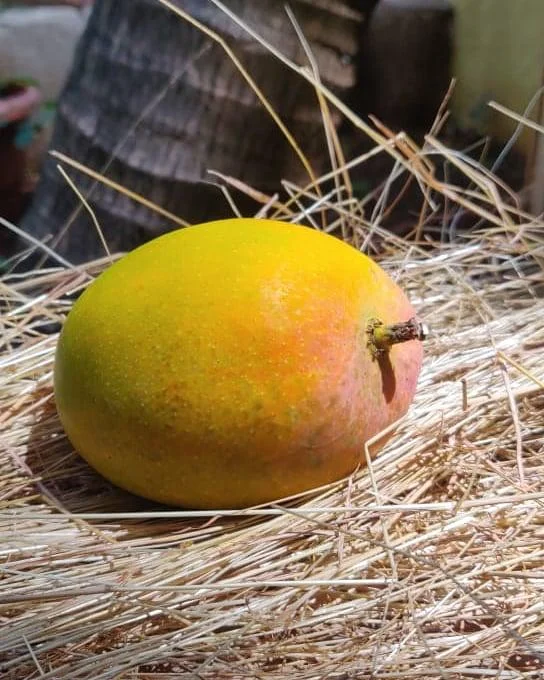
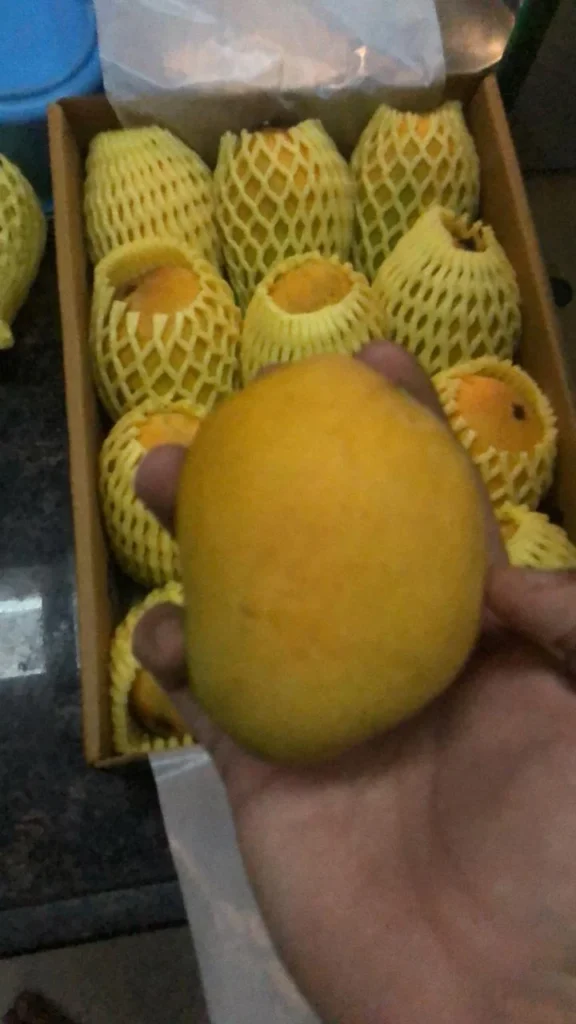
Import Requirements for Fresh Mango Fruits from India into Korea
South Korea Import Conditions : Fresh Mangoes for human consumption. Country of Origin is India – Vapour Heat Treatment
♦1 : Product subjected to the requirements:
Fresh fruits of mango (Mangifera indica L.) commercially produced in India
♦2 : Means of conveyance:
Air cargo or ship cargo (except for hand luggage or parcel post)
♦3 : Registration of Orchards and Packinghouses:
A. The owner of the orchards producing fresh mango fruits for export to Korea and packinghouses shall register the orchards and packinghouses with Agricultural and Processed Food Products Export Development Authority(“APEDA”) of India each year, and the orchards and packinghouses should be supervised by APEDA. Whereas VHT & HWT will be registered by NPPO, India.
B. The NPPO of India must inform the Animal and Plant Quarantine Agency of Korea(“APQA”) of the list of registered orchards and packinghouses before commencement of mango exportation every year.
C. The concerned state Department of Horticulture/Agriculture in association with APEDA shall supervise whether integral pest management is being carried out in the export orchards in order to prevent occurrence of Korea’s quarantine pests.
D. Packinghouses shall be equipped with facilities to prevent pest incursion. The packinghouse manager shall, on a regular basis, disinfect the facilities to prevent pest re-contamination. The NPPO of India shall check the sanitary conditions of the packinghouses each year before export.
♦4 : Sorting:
A. The fresh mango fruits for export to Korea shall be sorted and packed only in packinghouses registered with the APEDA of India.
B. When sorting fresh mango fruits for export to Korea, it must be ensured that the fresh fruits of mango produced in unregistered orchards or fresh fruits of other kinds are not sorted together.
C. The mango fruits for export to Korea must be brushed and washed by water, And the fruits shall be dipped in 200ppm solution of sodium hypochlorite at 52°C for 2 to 3 minutes in order to prevent the infection of Cytosphaera mangiferae and Xanthomonas campestris pv. mangiferaeindicae.
♦5 : Vapor Heat Treatment (VHT) and Hot Water Treatment (HWT):
A. The fresh fruits of mango for export to Korea shall be treated with saturated vapor by raising the fruit core temperature up to 47.5°C or higher for 20 minutes or with hot water at over 48°C for 60 minutes or more. The hot water treatment shall be applied only for mango fruits less than 500g in weight.
B. The vapor heat treatment or hot water treatment shall be conducted on each consignment in a registered facility under the supervision of plant quarantine inspectors of Korea and/or India.
C. Details of the vapor heat treatment and hot water treatment shall comply with the “Guidelines for Vapor Heat Treatment” in Annex 2 and “Guidelines for Hot Water Treatment” in Annex 3.
♦6 : Export Inspection and Certification:
A. The export inspection shall be carried out jointly by the APQA and the Indian plant quarantine inspectors, on over 2% sample of the entire cartons of fruits treated with vapor heat or hot water.
B. The consignment shall be certified on a phytosanitary certificate as free of Cytosphaera mangiferae, Xanthomonas campestris pv. mangiferaeindicae, Sternochetus frigidus and S. mangiferae in particular, through target inspection by APQA and India inspectors for those pests.
C. In case that any live fruit fly is detected as a result of the export inspection, the relevant consignment shall be rejected and the export of mango fruits from the concerned orchard and treatment facility shall be suspended until the cause is identified, remedial actions are taken. But, any live fruit fly is detected continuously the import inspection could be suspended until the cause is identified, remedial actions are taken, and the two countries reach an agreement. In case that Cytosphaera mangiferae, Xanthomonas campestris pv. mangiferaeindicae, and live Sternochetus frigidus or S. mangiferae are intercepted during the export inspection, the consignment shall be rejected and the export of mangoes from the orchards where the infested fruits were produced, shall be suspended for the remainder of the export season. The NPPO of India shall inform such pest detections to Korea. Nevertheless, in case that other live quarantine pests of Korea are found, the consignment may be exported after removing or destructing the pests through treatment, etc.
D. The shipping container shall be sealed under supervision by the India customs authorities. However, the integrity & phytosanitary security of the consignment will be ensured during transportation from packinghouse to the point of exit(Airport/Seaport).
E. For consignments that passed the export inspection, the NPPO of India shall issue a phytosanitary certificate with additional declaration specified below:
(1) This consignment complies with import requirements agreed between APQA and the NPPO of India, and is free from Cytosphaera mangiferae, Xanthomonas campestris pv. mangiferaeindicae,
(2) Sternochetus frigidus and S. mangiferaei;The name (or registration code) of the vapor heat treatment or hot water treatment facilities, orchard, pack-houses and date, temperature and duration of the treatment should be marked on the treatment section of the phytosanitary certificate; and
(3) Date of inspection and signature of a APQA plant quarantine inspector.
F. Consignments that passed the export inspection shall be stored, managed and transported separately from those that were rejected or that were not inspected in order to prevent the recontamination by contaminants such as pests and soil, etc. until their arrival in Korea.
♦7 : Packing and Labeling:
A. Each packing carton of the fresh fruits of mango that have been passed the export inspection, shall be sealed using the methods (including sticky tape, sticker or label, etc.) approved by the NPPO of India.
B. The label “For Korea” and “the name (or registration code) of orchards and packinghouses”, shall be marked outside of the each export packing carton.
C. In case that there are any ventilation holes on packing cartons, all holes shall be covered with net screen with a mesh size of less than 1.6×1.6 mm, in order to prevent pest re-infestation during storage or transportation.
♦8 : Import Inspection:
A. Upon arrival of the consignments, a APQA plant quarantine inspector shall check the sealing and packing of the cartons. In case that there are any problems with the sealing or packing under Article 7A and 7C in the above or in case that there are consignments in which the additional declaration or labelling under Article 6E and Article 7B is missing, the entire or parts of the consignment shall be destroyed or returned.
B. If no problems are found as a result of the checking pursuant to Section A of the above, import inspection shall be carried out in accordance with Korea’s Plant Protection Act and relevant regulations.(This article will be applied to the consignments treated and inspected solely by India plant quarantine officers in the future.)
(1) In case that any live fruit fly is found during the import inspection, the relevant consignment shall be destroyed or returned, and the import of mango from the orchard from where such consignment is sourced and the concerned treatment facility, shall be suspended until the cause is identified and remedial actions are taken. But, if any live fruit fly is detected continuously the import of inspection could be suspended until the cause is identified, remedial actions are taken and the two countries reach an agreement.
(2) In case that Cytosphaera tnangiferae, Xanthomona.s c’anipestri.s pv. mongiferaein‹licae, or live Sternochetus frigiJus or S. mangiferae are intercepted, the relevant consignment shall be treated (destroyed or returned if there is no available treatment method) and the import of fresh mango fruits from the relevant export orchard shall not be permitted for the remainder of that season.
(3) In case that any other live quarantine pest of Korea is detected during the import inspection, the consignment shall be treated, or if no treatment is available, the consignment shall be destroyed or returned.
(4) In case that any new pest that has not been assessed is found or in case that Korea’s quarantine pests in Annex 2 are detected continuously, increasing the risk of pest entry, APQA may conduct pest risk assessment and determine necessary quarantine measures based on the results of the assessment.
(5) APQA shall inform the NPPQ of India of the pest interception.
♦9 : Pre-clearance Inspection:
A. The fresh mango fruits for export to Korea shall be undergone a pro-clearance inspection by APQA plant quarantine inspector. The NPPO of India shall send a letter to APQA requesting the pre-clearance inspection, 20 days before commencement of export.
B. The invitation letter shall include the following information related to the export.
(1) The required number of APQA inspectors and inspection period;
(2) Estimated export volume; and
(3) The places of vapor heat treatment or hot water treatment
C. The APQA plant quarantine inspector shall check the process of vapor heat treatment or hot water treatment. and perform a joint export inspection in collaboration with the Indian plant quarantine inspectors, and if necessary, check sanitary conditions of export orchards and packinghouses.
D. The APQA plant quarantine inspectors shall indicate the date of export inspection and sign on the back of the phytosanitary certificate.
E. The costs for the APQA plant quarantine inspector pertaining to the preclearance inspection shall be borne by APEDA in accordance with the APQA’s guidelines for Overseas Travel Costs for Pre-clearance Inspections
F. The pre-clearance inspection shall be carried out for the first year after market access has been permitted, and whether to continue the pre-clearance inspection or not, shall be determined after reviewing the results of first year’s pre-clearance inspection through consultation between the two sides.
NOTE: Full details of the Vapour Heat Treatment (VHT) , including temperature and duration, must be included in the “Disinfestation and/or Disinfection Treatment” area of the phytosanitary certificate and as an endorsed attachment to the phytosanitary certificate.
Caution: For the most up-to-date regulations and requirements, always refer to the APEDA website (www.apeda.gov.in) and Animal and Plant Quarantine Agency (APQA) https://www.qia.go.kr/listindexWebAction.do